
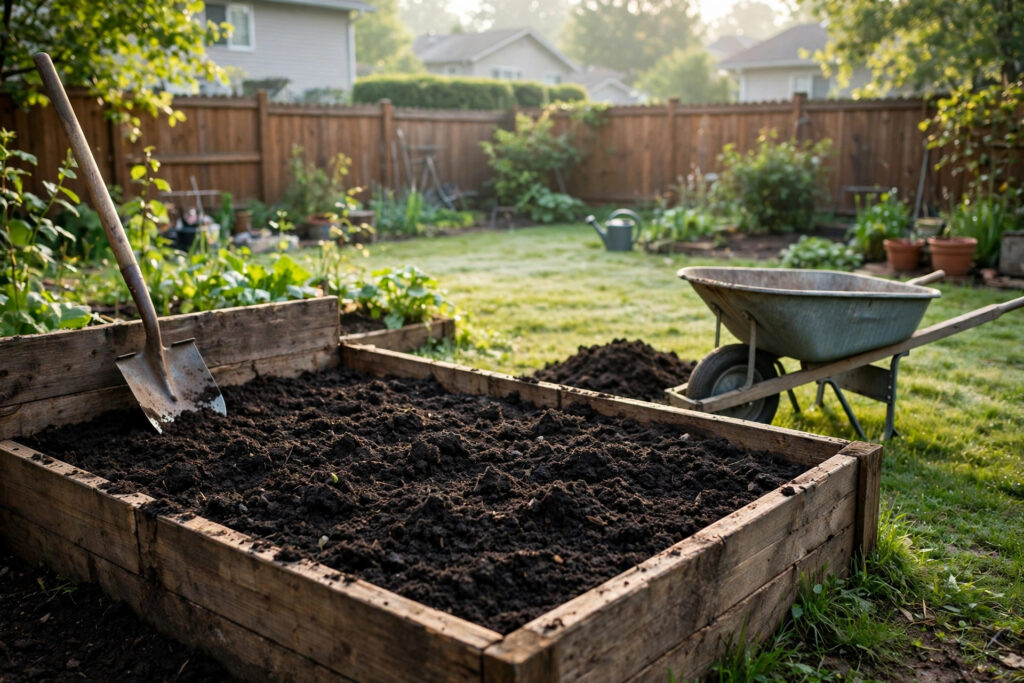
How much topsoil do I need? It depends on the size of the area and how deep you want it. A new lawn needs 4 to 6 inches, a garden bed needs 6 to 12 inches, and a thin top-dressing needs only a quarter inch. Measure the length and width, pick your depth, and our free Topsoil Calculator turns it into cubic yards, tons and bags. Use our top soil calculator to work out the cubic yards, tons and bags for your project before you order.
How Much Topsoil Do I Need? (By Project)
The same area needs very different amounts depending on the job. These are the depths most gardeners and landscapers use:
- New lawn: 4 to 6 inches of topsoil over the subsoil
- Garden bed: 6 to 12 inches, deeper for root vegetables
- Raised bed: fill to the top of the frame, usually 8 to 12 inches deep
- Top-dressing an existing lawn: a quarter to half an inch
- Filling a low spot: measure the depth at the deepest point and average it out
- Under sod: 4 to 6 inches, the same as a new lawn
A common mistake is guessing the depth. A bed that looks like it needs “a few inches” often needs six or more once the soil settles. Topsoil settles by about 10 to 20 percent in the first few weeks, so ordering a little extra is cheaper than ordering twice. Cornell University’s soil health program explains what makes topsoil good for growing, and why screened topsoil beats fill dirt for a garden.
How Much Topsoil Do I Need per Square Foot?
One cubic yard of topsoil covers about 100 square feet at 3 inches deep. The coverage changes with the depth:
- 1 inch deep: about 300 square feet per cubic yard
- 2 inches deep: about 150 square feet per cubic yard
- 3 inches deep: about 100 square feet per cubic yard
- 4 inches deep: about 75 square feet per cubic yard
- 6 inches deep: about 50 square feet per cubic yard
- 12 inches deep: about 25 square feet per cubic yard
For example, a 10 by 10 foot garden bed at 6 inches deep needs about 2 cubic yards. A 20 by 20 foot lawn area at 4 inches deep needs about 5 cubic yards. Our Topsoil Calculator does this math for any size, including round and triangular beds. How much topsoil do I need for a round bed? Measure the diameter, then use the calculator for the area.
How Much Does a Cubic Yard of Topsoil Weigh?
One cubic yard of topsoil weighs about 2,000 pounds, or about 1 ton, when dry. Wet topsoil can weigh up to about 2,700 pounds per cubic yard, because water adds a lot of weight. A standard dump truck carries about 10 to 14 cubic yards, which is about 10 to 14 tons of dry topsoil. Our top soil calculator shows the tons as well as the cubic yards, so you can check the truck weight before delivery.
That weight matters for delivery. A full truck needs firm, level ground, and the driver will want to place the pile as close to the work area as possible. If access is tight, ask the supplier about smaller loads.
How Many Bags of Topsoil Do I Need?
Bagged topsoil is usually sold in 40-pound bags, and each bag holds about 0.75 cubic feet. One cubic yard equals 27 cubic feet, so it takes about 36 bags to make one cubic yard.
- 1 cubic yard = about 36 bags of 40 pounds
- 2 cubic yards = about 72 bags
- 5 cubic yards = about 180 bags
Bags make sense for a small bed or a top-up. For a lawn or a large bed, bulk delivery is far cheaper per cubic yard. If you are buying bags, check the label: some bags are mostly compost or bark, not true screened topsoil. The top soil calculator gives the same answer in bags, so you can compare a bulk delivery against bagged topsoil for your bed.
Topsoil vs Mulch: Which One Do I Need?
Topsoil and mulch do different jobs. Topsoil is the growing medium — it holds roots, water and nutrients. Mulch is the cover on top — it holds moisture in, keeps weeds down and protects the soil. You need topsoil when you are building up the ground or filling a bed, and mulch when you are covering soil that is already there. For the mulch amount, see our Mulch Calculator. Work out the topsoil first with our top soil calculator, then use the Mulch Calculator for the top layer.
A good bed is built in layers: topsoil first, plants in, then 2 to 3 inches of mulch on top. Do not mix the two jobs — mulch buried under soil rots slowly and steals nitrogen from the plants while it breaks down.
Common Mistakes to Avoid
- Under-ordering. Topsoil settles by 10 to 20 percent, so add 10 percent extra to your order.
- Guessing the depth. Measure the depth in several places and use the average, not the shallowest spot.
- Buying unscreened soil. Screened topsoil is free of stones, roots and clods; unscreened soil needs raking and picking through.
- Spreading topsoil over a compacted base. Loosen the ground underneath first, or the new soil will sit on top like a carpet and drain badly.
- Ordering bags for a big job. Above about 2 cubic yards, bulk delivery is almost always cheaper.
Bottom Line
Measure the area, pick the depth, and add 10 percent for settling. A 10 by 10 foot bed at 6 inches deep needs about 2 cubic yards. Use our free Topsoil Calculator to work out the cubic yards, tons and bags for your project before you order. So how much topsoil do I need? For most beds, start with the depth, measure the area, and add 10 percent.
Written by the Yard & Bag Editorial Team. Our content is researched and checked against supplier guidance and standard building practice.