
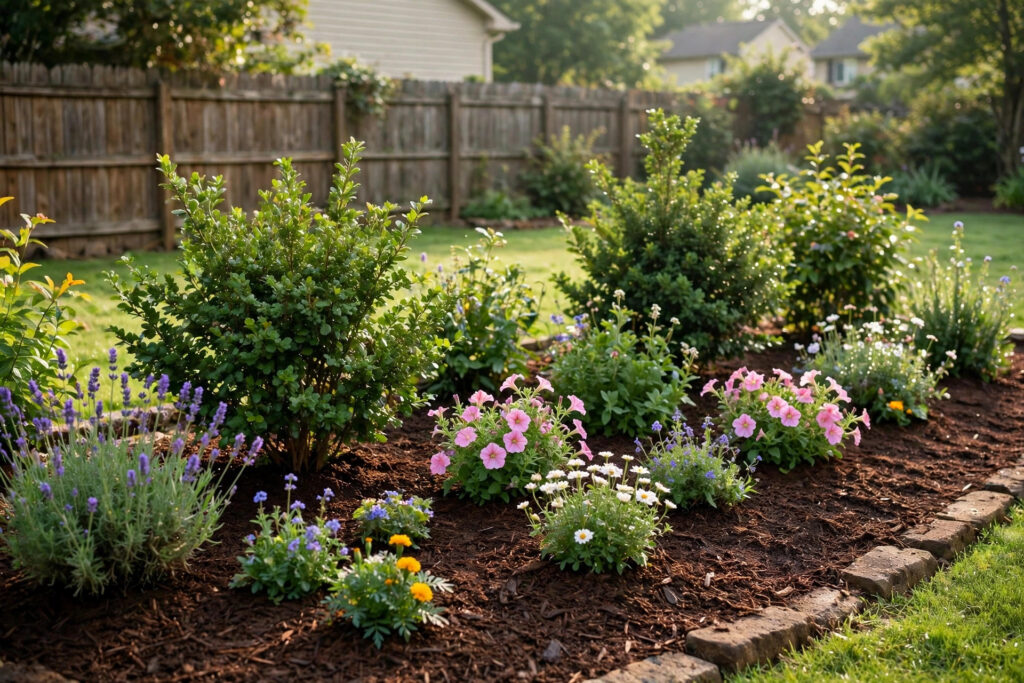
If you have ever searched for how to calculate how much mulch you need, start with three measurements: length, width and depth. Mulch is one of the easiest garden jobs to get wrong on quantity. Order too little and you are back at the garden center mid-job. Order too much and you have a pile of mulch sitting on the driveway all summer. The good news is the math is simple: measure your beds in feet, pick a depth in inches, and the formula does the rest. Our free Mulch Calculator works it out in seconds, and this guide explains the depth, the bag math and the cost behind it.
The Mulch Formula
The formula is: length (feet) x width (feet) x depth (inches) / 324 = cubic yards.
For example, a bed that is 10 feet long and 4 feet wide, at 3 inches deep: 10 x 4 x 3 / 324 = about 0.37 cubic yards. A bigger bed, 20 feet by 10 feet at 3 inches deep, needs about 1.85 cubic yards. Depth makes a big difference, so decide it before you order. That is the whole answer to how to calculate how much mulch I need for a bed: length times width times depth, divided by 324.
How to Calculate How Much Mulch You Need (Coverage Table)
One cubic yard of mulch covers about 100 square feet at 3 inches deep, or about 160 square feet at 2 inches deep. Here is what common bed sizes need at 3 inches deep:
- 10 x 10 feet: about 1 cubic yard, about 14 bags (2-cubic-foot bags)
- 10 x 20 feet: about 2 cubic yards, about 27 bags
- 20 x 20 feet: about 3.7 cubic yards, about 50 bags
- 20 x 30 feet: about 5.6 cubic yards, about 75 bags
- 30 x 40 feet: about 11 cubic yards, about 150 bags
Always add 5 to 10 percent extra for uneven ground and waste. A bed that is not a perfect rectangle needs a little more, because you measure the widest points and the corners eat into the coverage.
How Deep Should Mulch Be?
Two to three inches is the standard for flower beds and garden beds. It blocks weeds and holds moisture without smothering the plants. Around trees and shrubs, 3 to 4 inches is better, spread out to the drip line. Keep the mulch a few inches away from the trunk itself. Piling mulch against a trunk, called volcano mulching, holds moisture against the bark and causes rot. Knowing how to calculate how much mulch you need starts with the depth, because the depth decides how many cubic yards the bed takes.
More than 4 inches is too much. A thick layer stops water and air from reaching the soil, and it can stay wet enough to rot bark and roots. Less than 2 inches does not block weeds well. Once you know the depth, the question of how to calculate how much mulch I need comes down to measuring each bed and applying the formula.
Bags or Bulk: Which Is Cheaper?
Bagged mulch at a garden center usually sells for $3 to $6 per 2-cubic-foot bag. One cubic yard equals about 13.5 bags of that size. So a cubic yard in bags costs roughly $40 to $80, before you count the trips to carry it all home. Learning how to calculate how much mulch you need before you shop means you will know how many bags to buy before you reach the garden center.
Bulk mulch delivered usually runs about $30 to $60 per cubic yard, plus a delivery fee that is often $50 to $150. For anything over about a cubic yard, bulk delivery is much cheaper per cubic yard, and the truck drops it where you need it. Bags make sense for a small bed or a top-up. For a whole yard, order bulk. Learning how to calculate how much mulch you need first means the delivery quote is for the right amount, not a guess.
To work out the bag count for your beds, use our Mulch Calculator. It shows cubic yards and bags side by side, so you can compare the cost before you order. Clemson Cooperative Extension’s mulch guide explains which types suit garden beds and how deep to spread them.
How Much Does Mulch Cost?
For a typical front yard with about 200 square feet of beds at 3 inches deep, you need about 2 cubic yards. In bulk, that is roughly $60 to $120 for the mulch plus delivery. In bags, it is about 27 bags, roughly $80 to $160, plus your time hauling them. Work out how to calculate how much mulch I need in cubic yards before you get quotes, so you can compare the bulk and bag prices on the same basis.
Cedar and dyed mulch cost more than plain hardwood bark. Rubber mulch costs more up front but lasts 10 years or more, so it is used on playgrounds. See our Rubber Mulch Calculator if you are pricing that option. For most beds, plain hardwood bark mulch is the best mix of price, looks and soil benefit. If you are also topping up soil in the beds, our Topsoil Calculator works out that amount too. Knowing how to calculate how much mulch you need lets you work out whether the pricier cedar is worth it for the size of your beds.
Steps to Order Mulch
- Measure each bed in feet, length by width.
- Decide the depth: 2 to 3 inches for beds, 3 to 4 inches around trees.
- Work out the cubic yards with our Mulch Calculator, and add 5 to 10 percent for waste.
- Decide bags or bulk: under a cubic yard, bags are fine. Over that, bulk delivery is cheaper.
- Get two or three quotes, and ask whether delivery is included.
- Weed the beds first, then spread the mulch evenly and keep it away from trunks.
Common Mistakes to Avoid
- Volcano mulching: piling mulch against the tree trunk. Always leave a few inches of bare ground around the trunk.
- Spreading mulch too thick. More than 4 inches suffocates roots and stays soggy.
- Not weeding first. Mulch slows weeds down but does not kill the ones already there.
- Ordering by the bag for a big job. Over a cubic yard, bulk delivery costs far less per cubic yard than bags.
- Forgetting to measure. Guessing the amount is how you end up with a pile left over or a half-finished bed.
Bottom Line
Measure your beds, use 2 to 3 inches of hardwood bark mulch, keep it away from trunks, and order 5 to 10 percent extra. Use our free Mulch Calculator to work out how much you need in cubic yards and bags before you order. That is how to calculate how much mulch I need for any bed in seconds — measure, pick a depth, and let the calculator do the division.
Written by the Yard & Bag Editorial Team. Our content is researched and checked against supplier guidance and standard building practice.